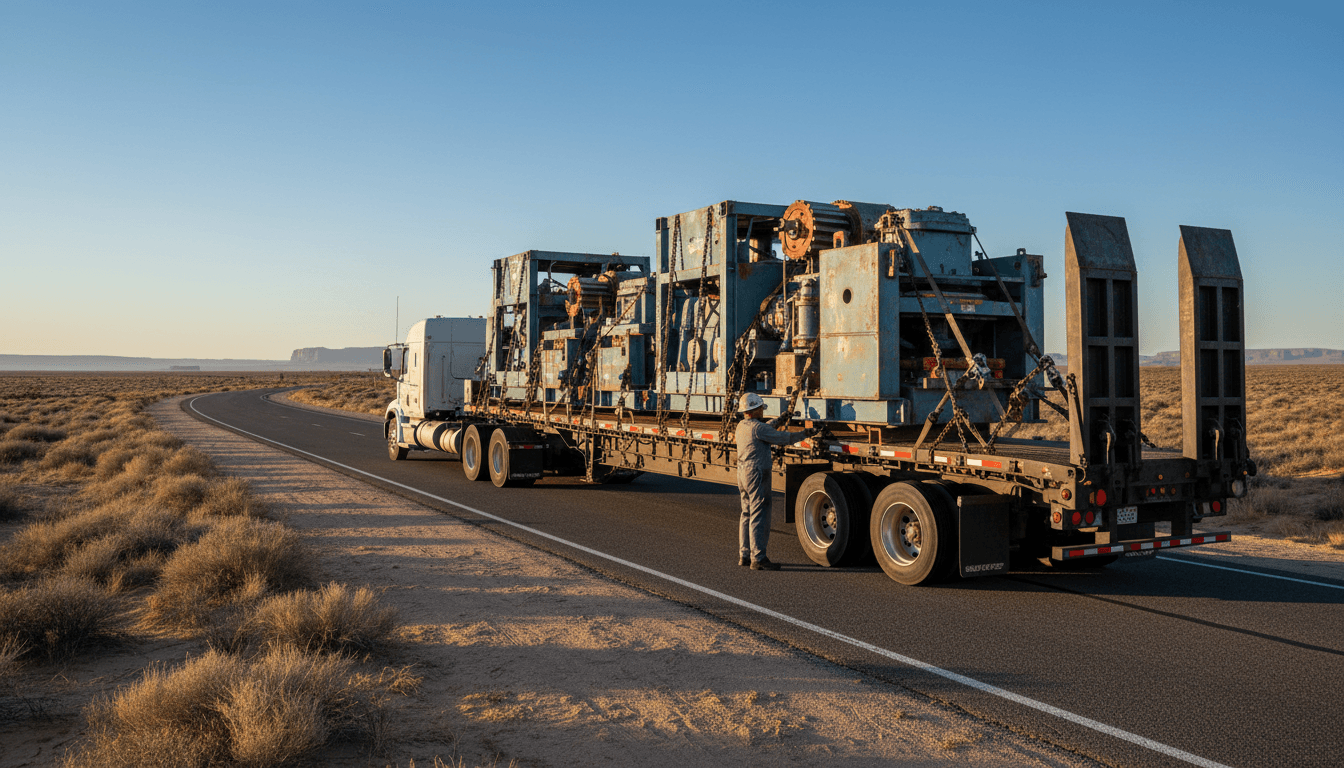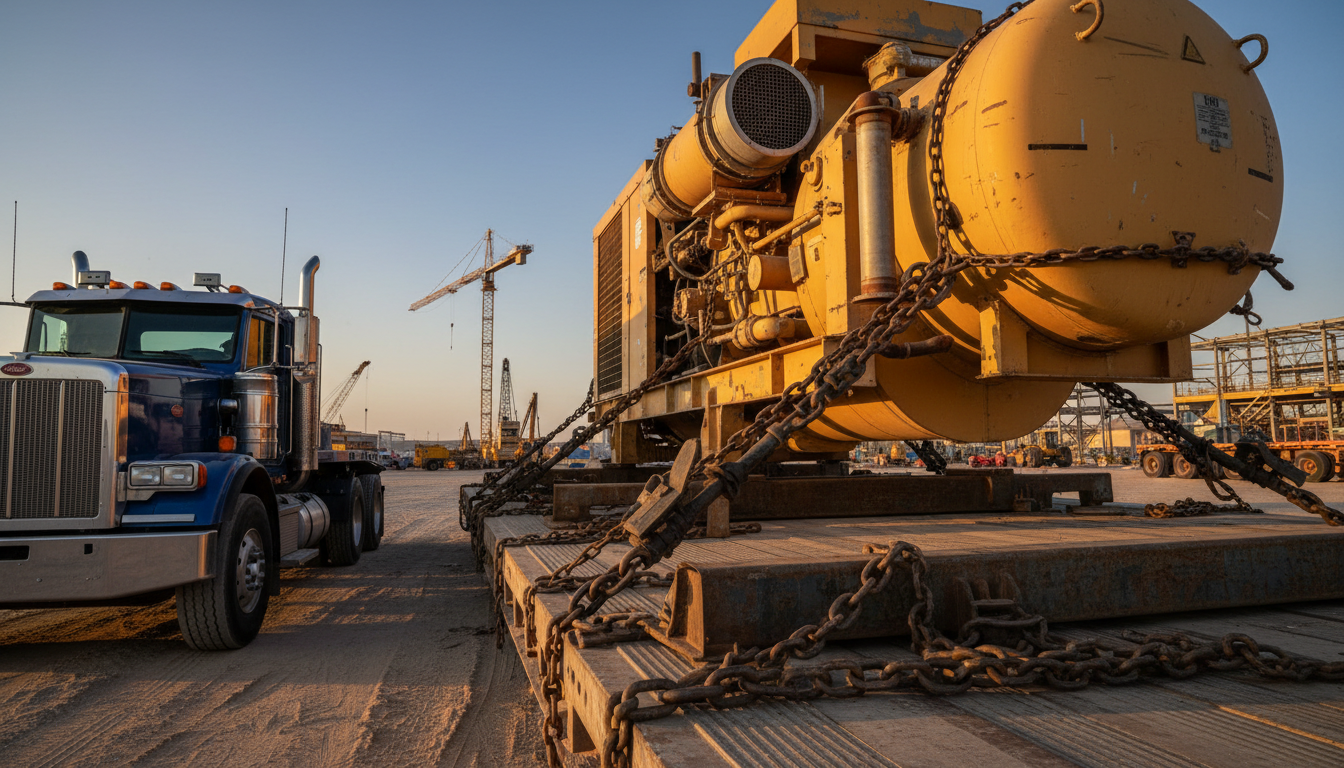
Common freight shipping mistakes small business owners encounter include misclassifying cargo, using improper packaging, and providing inaccurate weight or measurement data. Business owners can avoid these errors by double checking Bill of Lading information and selecting carrier partners that specialize in LTL or small business needs. Successfully navigating these freight shipping mistakes small business challenges ensures more predictable costs and reliable delivery schedules.
For a growing small business, a single shipping invoice riddled with unexpected accessorial fees or re-weigh surcharges can feel like a direct hit to your quarterly margins. These logistical errors are rarely just minor inconveniences; they represent systemic inefficiencies that erode your bottom line and damage customer trust. Whether it is a miscalculated NMFC code or a poorly optimized choice between LTL and FTL service, the nuances of freight movement require a high degree of precision to maintain profitability. This guide examines seven critical shipping mistakes that frequently trip up small business owners, ranging from documentation oversights on the Bill of Lading to the common failure to leverage regional expertise. By understanding these pitfalls and implementing professional strategies to avoid them, you can transform your logistics operation from a source of stress into a competitive advantage.
Why Small Business Shipping Errors Cost More Than You Think
For small to mid-sized businesses, the margin for error in transportation is shrinking. A single freight shipping mistakes small business owners make can appear as a minor administrative oversight, but the cumulative impact often threatens long-term profitability. Beyond the immediate carrier fees, shipping errors erode customer trust and disrupt inventory cycles. When a shipment arrives late or incurs unexpected surcharges, the business absorbs costs that directly slice into the bottom line.
Looking ahead to 2026, the logistics landscape is expected to face tighter capacity and more volatile fuel surcharges. In this environment, operational accuracy is not just a goal; it is a competitive advantage. Companies that master their shipping data avoid the cascading costs of re-classifications and missed delivery windows that their competitors often absorb. Precision in documentation and packaging becomes the primary way to protect margins as rates fluctuate.
Intermountain Logistics, based in Fillmore, UT, works with growing enterprises to mitigate these risks. Our experienced professionals understand that every shipment is a promise made to a customer. By providing reliable logistics solutions, we help regional businesses navigate complex routing and documentation requirements. If you are struggling with rising transportation costs, you can contact Intermountain Logistics to review your current processes. Managing these hurdles effectively requires a shift from reactive shipping to a proactive, precision-based strategy.
Mistake 1: Inaccurate Weight and Measurement Calculations
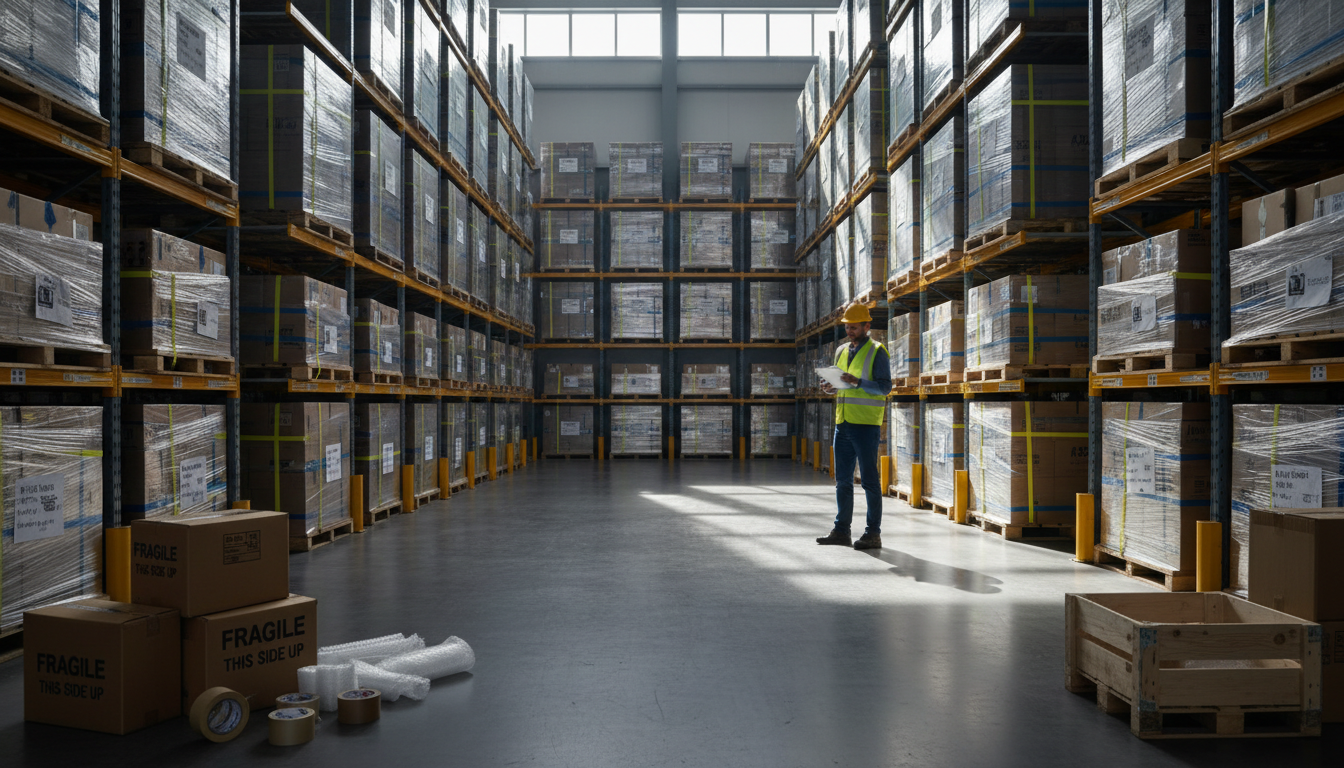
One of the primary freight shipping mistakes small business owners make is relying on estimates rather than precise data. Many shippers assume that rounding down a few inches or estimating weight based on product specifications will suffice. However, modern carrier terminals utilize automated dimensioners and calibrated floor scales that detect even minor discrepancies. When measurements are off, carriers trigger re-weigh and inspection fees that frequently negate any initial cost savings and cause administrative delays.
Successful shipping requires a "measure twice, ship once" approach. A proper measurement includes the pallet itself; measure the height from the warehouse floor to the highest point of the load. If cargo overhangs the pallet edges, the length and width must reflect those widest points, not the pallet base. For weight, ensure you account for the 30 to 50 pounds contributed by the wooden pallet itself.
Measurement Component | Proper Method |
|---|---|
Height | Floor to the highest point of the cargo |
Width/Length | Widest point, including any pallet overhang |
Total Weight | Product weight + packaging + pallet weight |
Confusion often arises between actual weight and dimensional (DIM) weight. While actual weight is the scale reading, DIM weight measures the density of the shipment based on the space it occupies. Carriers calculate this by multiplying L x W x H and dividing by a specific factor, then billing for whichever weight is higher. Using reliable logistics solutions to verify these figures ensures that your quotes remain accurate and your margins stay protected against post-delivery billing adjustments.
Mistake 2: Misclassifying Freight and NMFC Codes
Navigating the National Motor Freight Classification (NMFC) system is one of the most technical challenges in regional transport. The NMFC categorizes freight into 18 different classes, ranging from Class 50 to Class 500. This system exists to standardize pricing based on how difficult a shipment is to move. When shippers guess their class, they often fall into one of the most expensive freight shipping mistakes small business owners encounter.
The classification is determined by four primary factors: 1. Density: The pounds per cubic foot; this is the most common driver of freight class. 2. Handling: Requirements for specialized care, fragility, or unique equipment needs. 3. Stowability: How well the freight fits with other items; non-stackable or hazardous items are harder to stow. 4. Liability: The risk of theft, damage, or spoilage, as well as the total value of the goods.
To illustrate, consider the difference between shipping ping pong balls and lead weights. Ping pong balls are high volume but low density, occupying significant trailer space while weighing very little, which results in a very high freight class. Conversely, lead weights are low volume and high density, earning a much lower class. If you misclassify ping pong balls as a lower class, the carrier will flag the discrepancy during transit.
Carriers employ inspectors who use laser dimensioners and calibrated scales to verify cargo. A misclassification leads to a re-classification fee and a weight-adjusted rate that can easily double your original quote. Relying on experienced professionals to audit your NMFC codes before the truck arrives is essential. By utilizing reliable logistics solutions, you ensure that your documentation matches your physical cargo, protecting your budget from these avoidable administrative penalties.
Mistake 3: Improper Packaging and Poor Palletizing

Once the freight is correctly classified, the physical preparation of the shipment becomes the next critical hurdle. Improperly securing cargo is among the most visible freight shipping mistakes small business owners encounter, and its consequences extend beyond simple breakage. If packaging fails, a carrier's liability often ends before the shipment even reaches its destination. For fragile items, adopt the box-in-box method; place the primary product box inside a larger container with at least two inches of cushioning on all sides to absorb transit vibrations.
Pallet stability depends heavily on stacking patterns. New shippers often create pyramid shapes, which are prone to shifting and crushing. Instead, use a chimney or interlocking pattern. Interlocking boxes, similar to the layout of a brick wall, create a stable unit that resists lateral movement. Chimney stacking, where boxes align perfectly vertically, maximizes the compression strength of the cardboard for heavy loads.
Security also requires high quality shrink wrap rather than thin, consumer grade alternatives. Wrap the load at least three to five times, making sure to anchor the wrap to the wooden pallet base itself. If a carrier deems packaging 'insufficient' upon inspection, they can legally deny insurance claims even if their driver was at fault for a mishap. Relying on reliable logistics solutions ensures your warehouse team follows these industrial standards, protecting your bottom line from the high costs of transit damage.
Mistake 4: Errors on the Bill of Lading (BOL)

Even the most securely palletized cargo can end up stranded if the documentation is flawed. The Bill of Lading (BOL) is the definitive legal contract between the shipper and the carrier, governing the transfer of goods and the assignment of financial liability. Among the most frequent freight shipping mistakes small business owners make is treating the BOL as a mere receipt rather than a binding legal document that dictates the entire transit process.
Precision is required for every field to avoid service interruptions. Common errors that derail shipments include:
Inaccurate delivery addresses or missing zip codes.
Omission of contact phone numbers for the consignee, which prevents delivery scheduling.
Vague commodity descriptions that fail to match NMFC standards or clarify the contents.
When these details are incorrect, carriers often hold freight at a local terminal while awaiting clarification, leading to daily storage fees that quickly exceed the original freight rate. Once a driver signs the BOL at your dock, they are acknowledging the cargo as described and the destination as listed. Amending this document mid-transit is a bureaucratic headache that typically requires a formal Letter of Correction and additional administrative charges. Utilizing reliable logistics solutions ensures your paperwork is audited for accuracy before the driver arrives. By partnering with experienced professionals, you reduce the risk of clerical errors that lead to lost time and inflated invoices.
Mistake 5: Choosing LTL When FTL Is Smarter (and Vice Versa)
Selecting the wrong shipping mode is a subtle but expensive freight shipping mistakes small business owners frequently encounter. Less-Than-Truckload (LTL) is the standard choice for shipments of one to six pallets. However, as a business scales, sticking to LTL by default can backfire. Once a shipment exceeds ten pallets, a Full Truckload (FTL) often becomes more cost-effective. FTL provides a dedicated trailer, moving cargo directly from origin to destination without the constant reloading found in LTL hub and spoke networks.
Shipping Mode | Ideal Pallet Count | Typical Handling | Transit Speed |
|---|---|---|---|
LTL | 1 to 6 pallets | High (Multiple Hubs) | Standard |
FTL | 10+ pallets | Low (Dock-to-Dock) | Faster |
Because LTL shipments are consolidated with other freight, they undergo significantly more handling. Each touchpoint increases the probability of transit damage. Looking toward 2026, market data suggests LTL rates will rise faster than FTL, particularly within the Intermountain West. Tightening capacity in regional hubs makes volume consolidation even more critical. Experienced professionals can help determine if a partial truckload or FTL conversion will protect your margins. By utilizing reliable logistics solutions, you ensure your transportation strategy scales efficiently. For a detailed lane analysis, you should contact Intermountain Logistics to review your shipping volume and frequency.
Mistake 6: Overlooking Accessorial Fees and Hidden Costs
While choosing the right mode optimizes base rates, neglecting the specific requirements of the origin and destination can trigger a cascade of surcharges. Among the most frequent freight shipping mistakes small business owners encounter is the assumption that a standard quote covers all operational variables. Carriers quote based on dock to dock service; any deviation from this standard triggers an accessorial fee. If these services are not declared at the time of the quote, carriers will bill them back at a premium rate after delivery, often adding administrative processing charges on top of the service fee.
Accessorial Fee | Triggering Condition |
|---|---|
Liftgate | Origin or destination lacks a loading dock or forklift to move freight from the trailer. |
Residential Delivery | Pickups or deliveries in residential zones, including home-based businesses. |
Limited Access | High-security or restricted areas like schools, construction sites, or storage facilities. |
Inside Delivery | Moving cargo beyond the immediate threshold or loading dock of the building. |
Providing reliable logistics solutions requires full transparency regarding delivery site conditions. For example, attempting a delivery to a construction site without a pre-arranged liftgate can result in the carrier returning the freight to a terminal, which incurs both redelivery and daily storage fees. To maintain cost control, engage experienced professionals who can audit your shipping locations and ensure all necessary accessorials are captured in the initial quote rather than as a post-delivery surprise.
Mistake 7: Neglecting Regional Logistics Expertise
Many organizations rely on massive national brokers to manage their supply chains, assuming that scale automatically equals reliability. However, failing to leverage regional expertise is one of the most persistent freight shipping mistakes small business owners make when moving goods through the West. National algorithms often fail to account for the volatile reality of mountain transit. A broker in a coastal city might not realize that a winter storm at a high-elevation pass on I-70 or I-15 can shut down freight lanes for hours, leaving your cargo stranded. Local partners understand how to pivot routes or adjust pickup times to beat the weather before it closes a pass.
Based in Fillmore, UT, Intermountain Logistics operates at a strategic crossroads for the Intermountain region. This location provides a unique vantage point for managing shipments between regional hubs that national providers often overlook. Unlike distant brokers who see only data points, experienced professionals in the region understand the nuances of local terrain and infrastructure. We provide reliable logistics solutions that utilize real-time insights into road conditions and regional carrier capacity. If you need a partner who understands the specific hurdles of Intermountain distribution, you should contact Intermountain Logistics. Our team ensures that seasonal delays do not become permanent disruptions to your growth.
Avoiding these common shipping pitfalls is essential for protecting your bottom line and ensuring customer satisfaction. While small business owners can manage many of these details independently, the complexities of freight can often become a distraction from core operations. If you want expert help navigating the logistics landscape, our team is here to provide guidance and reliable solutions. You can learn more about Intermountain Logistics to see how we help businesses streamline their shipping processes and avoid costly errors before they happen.