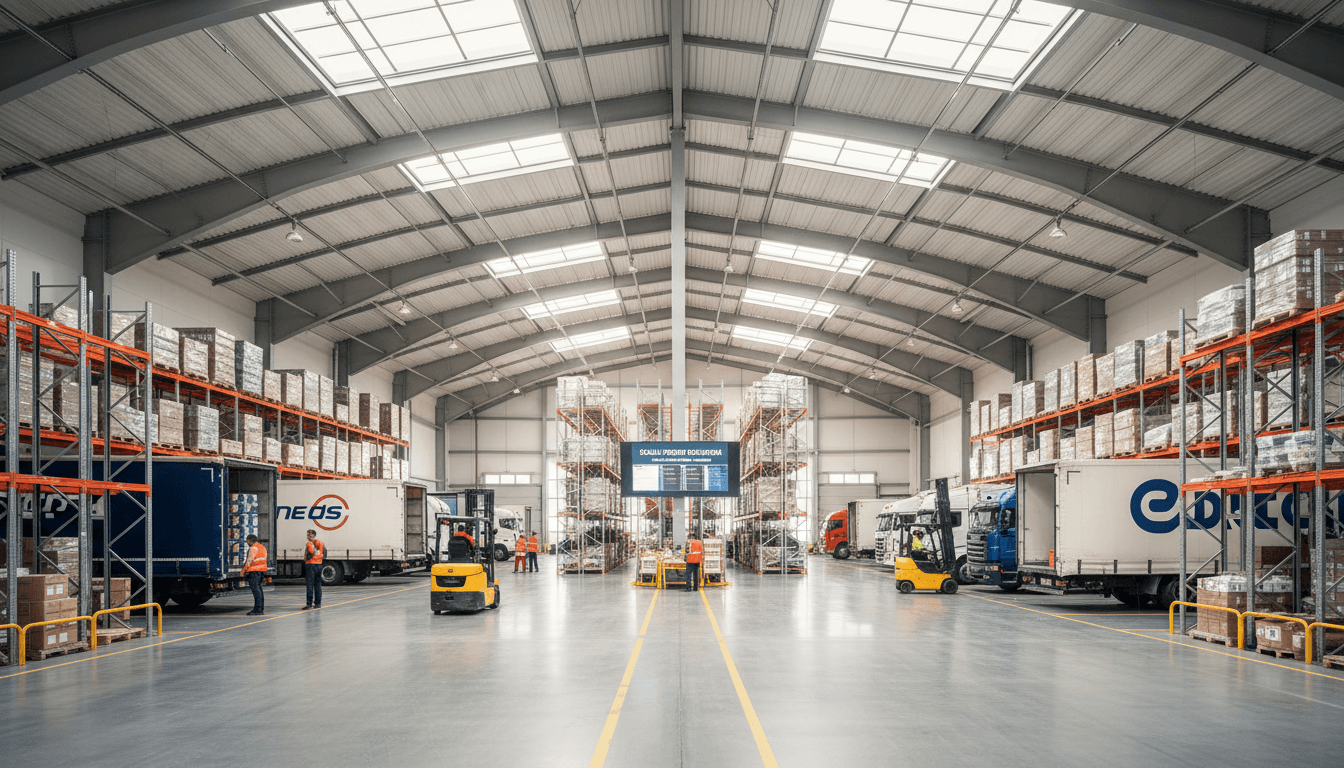
To reduce shipping costs for small business, owners should negotiate discounted rates with multiple carriers and optimize packaging to eliminate unnecessary dimensional weight charges. Utilizing flat-rate shipping services and integrated technology further lowers expenses while maintaining the fast delivery times customers expect.
For many small business owners, shipping costs often feel like a fixed expense that steadily erodes profit margins. You want to deliver products quickly to remain competitive, yet the rising price of freight can make every shipment feel like a financial trade-off. Balancing speed with affordability requires more than just picking a standard carrier; it demands a strategic approach to logistics management. In this guide, we provide practical, expert strategies to optimize your outbound logistics without sacrificing the delivery times your customers expect. You will learn how to master dimensional weight, leverage regional distribution networks, and utilize automation to secure better rates. By implementing these sophisticated methods, you can transform your shipping department from a cost center into a lean, efficient component of your business operation.
The Challenge of Balancing Freight Costs and Delivery Speed
The "Amazon Prime" effect has fundamentally shifted consumer behavior, creating a standard where fast shipping is no longer a perk but a baseline requirement. For small businesses operating on thin margins, this expectation arrives at a difficult time. Rising fuel surcharges and frequent carrier rate increases directly impact the bottom line, often making rapid delivery feel financially unsustainable.
Many operators believe they must choose between high-priced expedited services and the slowest ground options available. However, finding the right balance does not require sacrificing speed for the sake of the budget. It is possible to reduce shipping costs for small business by moving away from reactive shipping and toward strategic coordination.
At Intermountain Logistics, we leverage modern planning and routing tools to find the intersection of logistical efficiency and delivery speed. By prioritizing reliable logistics solutions and organized transportation, we help businesses in the Intermountain region navigate complex supply chains. Our approach focuses on data-driven routing to eliminate unnecessary delays and control costs; this ensures that your freight moves predictably without the premium price tag typically associated with last-minute expedited freight. Balancing these factors is the first step in scaling a sustainable distribution model.
1. Master Dimensional Weight and Packaging Efficiency
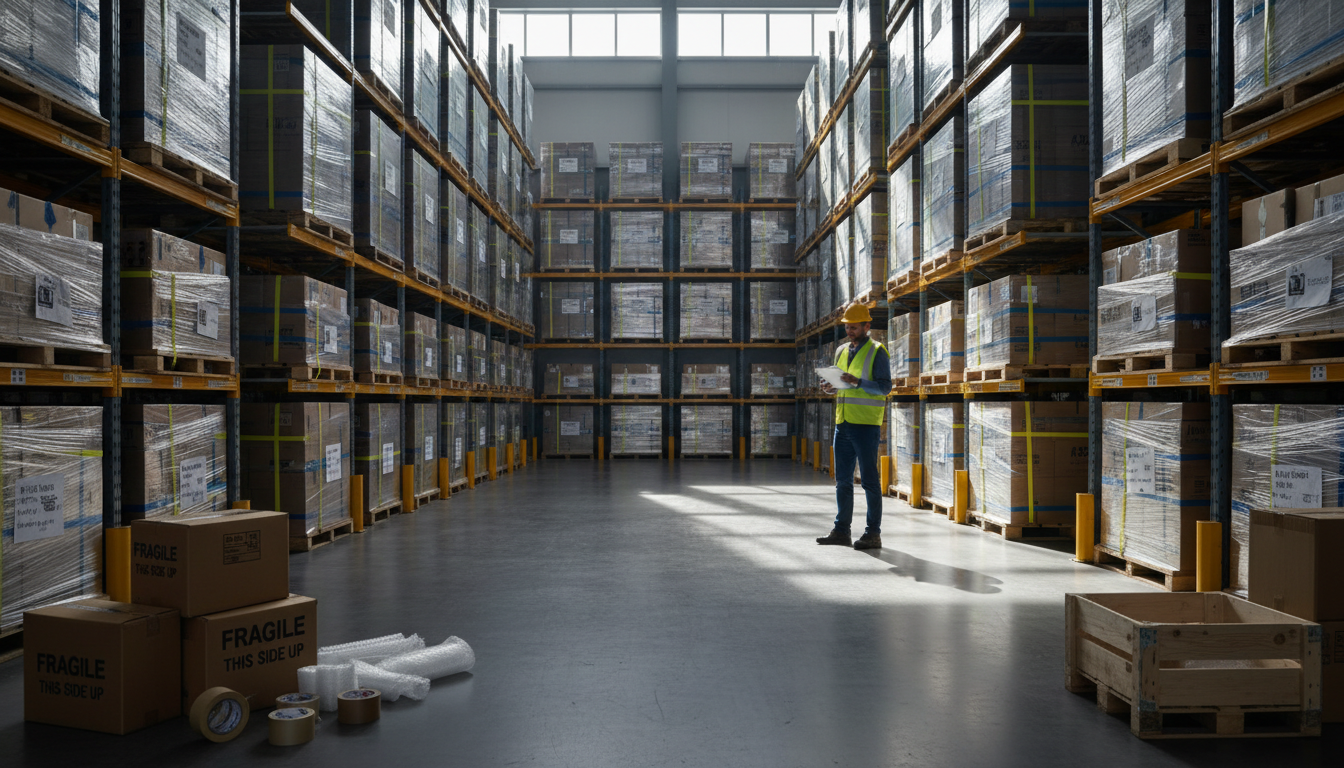
One of the most effective ways to reduce shipping costs for small business is to audit how your products are physically packaged. Major national carriers utilize Dimensional (DIM) weight to determine pricing, which means you are billed based on the amount of space a package occupies in a vehicle rather than its actual weight. If you ship a light object in a large box, you are essentially paying to ship air.
Consider the difference between shipping a bulky, five-pound decorative pillow in a 20-inch cube box versus shipping a ten-pound set of iron weights in a small, reinforced carton. Under DIM weight rules, the pillow may actually cost more to ship because its volume displaces more cargo space in a delivery truck. To combat this, businesses should transition to right-sized packaging. Using poly mailers for soft, non-fragile items like apparel can significantly lower costs by eliminating the rigid volume of a cardboard box. For fragile goods, custom-sized boxes designed for specific SKU dimensions prevent overspending on oversized containers and excessive filler material.
Packaging Type | Best Use Case | Cost Impact |
|---|---|---|
Poly Mailers | Apparel and soft goods | Lowest DIM weight; minimal storage space |
Custom-Sized Boxes | Fragile or high-value items | Reduces dunnage costs and DIM surcharges |
Corrugated Wraps | Books or flat media | Eliminates empty corner space |
At Intermountain Logistics, we understand that wasted space equals wasted capital. Our commitment to reliable logistics solutions involves prioritizing organized transportation to maximize trailer density and reduce environmental waste. By ensuring freight is consolidated and routed with precision, we help our partners minimize the financial impact of inefficient packaging. If your current shipping methods feel inconsistent, you can contact our shipping experts to evaluate how optimized routing and regional coordination can improve your bottom line.
2. Leverage Regional Logistics Partners for Distribution

Optimizing your packaging is a vital first step, but even the most efficient box becomes expensive if it has to travel across the entire country. Relying on a single distribution hub to serve a national customer base often leads to "zone jumping," a term carriers use when a package crosses multiple geographical shipping zones. Because carriers like UPS and FedEx price their services based on the distance between the origin and destination, shipping from a coastal warehouse to the Mountain West can easily trigger the highest possible rate tiers.
To effectively reduce shipping costs for small business, you should consider the strategic advantage of a regional logistics partner. For companies targeting customers in the Intermountain West, utilizing a distribution point in Fillmore, Utah, provides a central gateway to major markets in Idaho, Nevada, Arizona, and Colorado. This localized approach allows you to reclassify long-haul shipments into short-haul deliveries. By keeping inventory closer to the end user, you significantly decrease the number of zones a package must traverse, which is the primary driver of high shipping rates.
Shipping Factor | National Carrier Hub | Regional Logistics Partner |
|---|---|---|
Pricing Basis | National Zone (1-8) | Localized/Short-Haul |
Typical Transit | 3 to 5 Business Days | 1 to 2 Business Days |
Handling | High-volume sorting | Specialized distribution |
Beyond cost savings, regional distribution offers a massive advantage in delivery speed. National carriers often route packages through massive, congested sorting facilities that can add unnecessary time to the journey. Localized coordination can cut transit times by 24 to 48 hours compared to standard national ground services. You can learn more about our regional expertise and how we facilitate these faster timelines through organized freight movement. By leveraging reliable logistics solutions tailored to the Intermountain region, businesses can meet modern delivery expectations without the premium price tag. If you are ready to move away from expensive long-zone shipping, contact our shipping experts to discuss a coordinated distribution plan.
3. Automate Rate Comparisons with Multi Carrier Software

Finding the most competitive UPS small business shipping rates or navigating USPS shipping for small business should not involve multiple browser tabs and manual data entry. Manually comparing rates for every order is a significant time sink that scales poorly as order volume grows. Instead, modern operators use multi carrier shipping software to automate these comparisons in real time.
These platforms integrate directly with major carriers to aggregate pricing in a single dashboard. This visibility is crucial when deciding between Standard Shipping and Priority Mail. Standard shipping is often the most cost effective for non urgent freight, but it lacks the guaranteed timelines of Priority services. Automation software analyzes the destination zip code and the required delivery date to select the cheapest possible service level that still fulfills the customer's expectation. For instance, a shipment to a neighboring state might reach the customer in two days via standard ground, making an expensive priority upgrade unnecessary.
Service Type | Typical Transit | Relative Cost | Best For |
|---|---|---|---|
Standard / Ground | 3 to 7 Days | Low | Non urgent, heavy items |
Priority Mail | 1 to 3 Days | Medium | Small items needing speed |
Expedited / Air | 1 to 2 Days | High | Perishables or urgent parts |
Implementing these tools allows your team to focus on fulfillment rather than clerical work. At Intermountain Logistics, we utilize modern planning and routing tools to ensure accuracy and cost control across every shipment. If you need assistance navigating complex carrier options, you can contact our shipping experts to learn how reliable logistics solutions can streamline your regional distribution and help you further reduce shipping costs for small business.
4. Negotiate Rates or Join Shipping Consolidators
A common question among growing enterprises is: "Do small businesses get shipping discounts?" The answer is a definitive yes, though the deepest discounts are typically reserved for high-volume shippers. If your current volume is low, you can still negotiate with carriers by presenting documented growth projections. Carriers are often willing to provide introductory discounts if they see a clear path to increased freight volume over the next twelve months.
For many businesses, however, the most effective way to reduce shipping costs for small business is to partner with a third-party logistics (3PL) provider or a shipping consolidator. These entities aggregate the volume of hundreds of small clients to secure "bulk" rates that an individual business could never access on its own. By riding on the back of these high-volume contracts, you instantly gain a more competitive edge.
Method | Negotiation Type | Typical Savings | Best For |
|---|---|---|---|
Direct Negotiation | Volume-based | 5% to 15% | Established growth trends |
3PL Consolidation | Contract-sharing | 20% to 40% | Rapidly scaling businesses |
Spot Quoting | Transactional | Variable | Irregular freight |
At Intermountain Logistics, we specialize in helping businesses scale their supply chain as they outgrow basic parcel services. We provide reliable logistics solutions that move beyond simple shipping into coordinated freight management. Our team understands how to transition your operations from retail rates to wholesale logistics. If you are looking to bridge the gap between small-scale shipping and professional distribution, you can contact our shipping experts to discuss how our regional infrastructure can lower your overhead.
5. Reduce Returns and Shipping Errors through Better Coordination

Reverse logistics, or the cost of handling returns, is a significant profit leak that many operators overlook. Every return effectively doubles your shipping expenditure while adding labor costs for inspection and restocking. To effectively reduce shipping costs for small business, prevention is the most efficient strategy. Providing high-quality product photos and granular descriptions reduces the likelihood of "item not as described" claims. Additionally, setting shipping thresholds, such as free shipping on orders over $75, encourages higher cart values to help offset the outbound logistics expense.
Shipping errors and lost packages also create unnecessary overhead through costly reshipments. Accurate communication and real-time tracking are essential to prevent "where is my package" inquiries and missed deliveries. At Intermountain Logistics, we prioritize these reliable logistics solutions to ensure every shipment is accounted for from the loading dock to the final destination. By focusing on precision and organized coordination, you can eliminate the waste associated with manual errors and improve your overall supply chain health. If you need a partner to refine your regional distribution accuracy, you can contact our shipping experts today.
Tax Benefits: Can a Small Business Write Off Shipping Costs?
Business owners frequently overlook how tax deductions help effectively reduce shipping costs for small business. Shipping is generally a fully deductible business expense. Inbound freight costs are typically categorized under Cost of Goods Sold (COGS), while outbound shipping to customers is classified as a direct selling expense. Both serve to lower your total taxable income.
Maximizing these deductions requires meticulous record keeping. The reporting features within our modern planning tools streamline this process, providing the clear documentation needed for year end filings. While you should consult a tax professional for specific guidance, utilizing reliable logistics solutions ensures your data is organized and accessible. You can contact our shipping experts to learn more about our regional expertise and how coordinated logistics can improve your bottom line.
Managing shipping costs while maintaining delivery speed is all about balancing efficiency with smart carrier choices. By implementing these strategies, your business can significantly improve its bottom line without sacrificing the customer experience. While these tips offer a great starting point, navigating the complexities of global logistics often requires a deeper level of specialized knowledge. If you want expert help optimizing your supply chain, you can learn more about our team and how we support growing businesses.