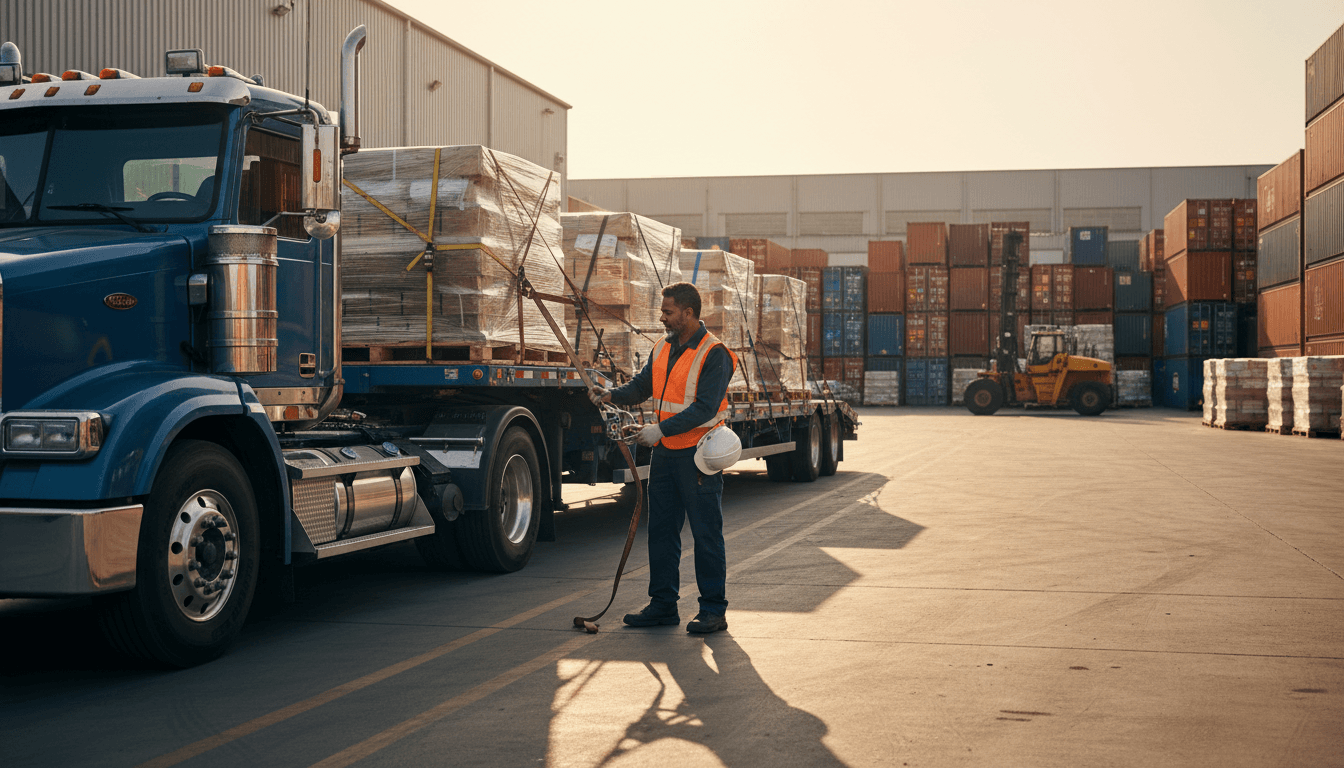
Proper freight packaging and palletizing involves stacking boxes in a column pattern without overhang to maximize stability and prevent crushing. Shippers must secure the load with high-quality stretch wrap and clear labeling to avoid transit damage and unexpected carrier fees; additionally, using corner boards provides extra protection for fragile edges.
A single improperly secured pallet can compromise an entire shipment, leading to expensive freight claims, rejected deliveries, and frustrated customers. For logistics managers, the hidden costs of poor packaging often manifest as unexpected accessorial fees and transit delays that erode profit margins. Mastering the science of palletization is essential for maintaining a streamlined supply chain. In this guide, we will leverage our expertise to walk you through the critical steps of freight preparation. You will learn how to select the right pallet foundation, compare column versus interlocking stacking methods, and apply professional securing techniques using wrap and banding. Furthermore, we will address labeling best practices and strategies to avoid the common surcharges that often catch shippers off guard. By refining these physical logistics processes, you ensure your cargo arrives intact and your operational budget remains predictable.
The High Cost of Poor Freight Packaging and Palletizing
Shipping goods across the Intermountain region involves more than just putting items in a box and hoping for the best. For small businesses operating out of hubs like Fillmore, Utah, the stakes of freight packaging and palletizing are incredibly high. Improperly prepared shipments lead to two primary financial drains: physical cargo damage and unexpected accessorial fees from carriers. While a damaged product represents a direct loss of inventory and customer trust; accessorial fees for re-weighing or re-classifying poorly secured loads can quietly erode profit margins.
Effective logistics rely on the 3 Ps of packaging as a foundational concept. Protection ensures the goods survive the physical rigors of transit, such as vibrations and shifts. Preservation maintains the condition and quality of the product by shielding it from environmental factors. Presentation ensures that when the shipment arrives at a regional distribution center, it reflects the professionalism and reliability of your brand.
It is vital to distinguish between basic parcel shipping and heavy freight logistics. While parcel services handle individual units that can be manually sorted, heavy freight involves moving massive, consolidated loads that require mechanical handling via forklifts and pallet jacks. A single box might survive a small drop, but a thousand-pound pallet must be engineered to withstand lateral shifts and vertical pressure during LTL (Less Than Truckload) transit. Providing reliable logistics solutions starts with understanding that freight requires a structural foundation, not just a container. When businesses fail to account for these differences, they often face significant surcharges. For a deeper look at these costs, understanding freight accessorial charges is a critical step for any growing enterprise. If you need help refining your strategy, you can contact our logistics experts to ensure your goods move efficiently through the Intermountain supply chain.
Selecting the Foundation: Choosing the Right Pallet
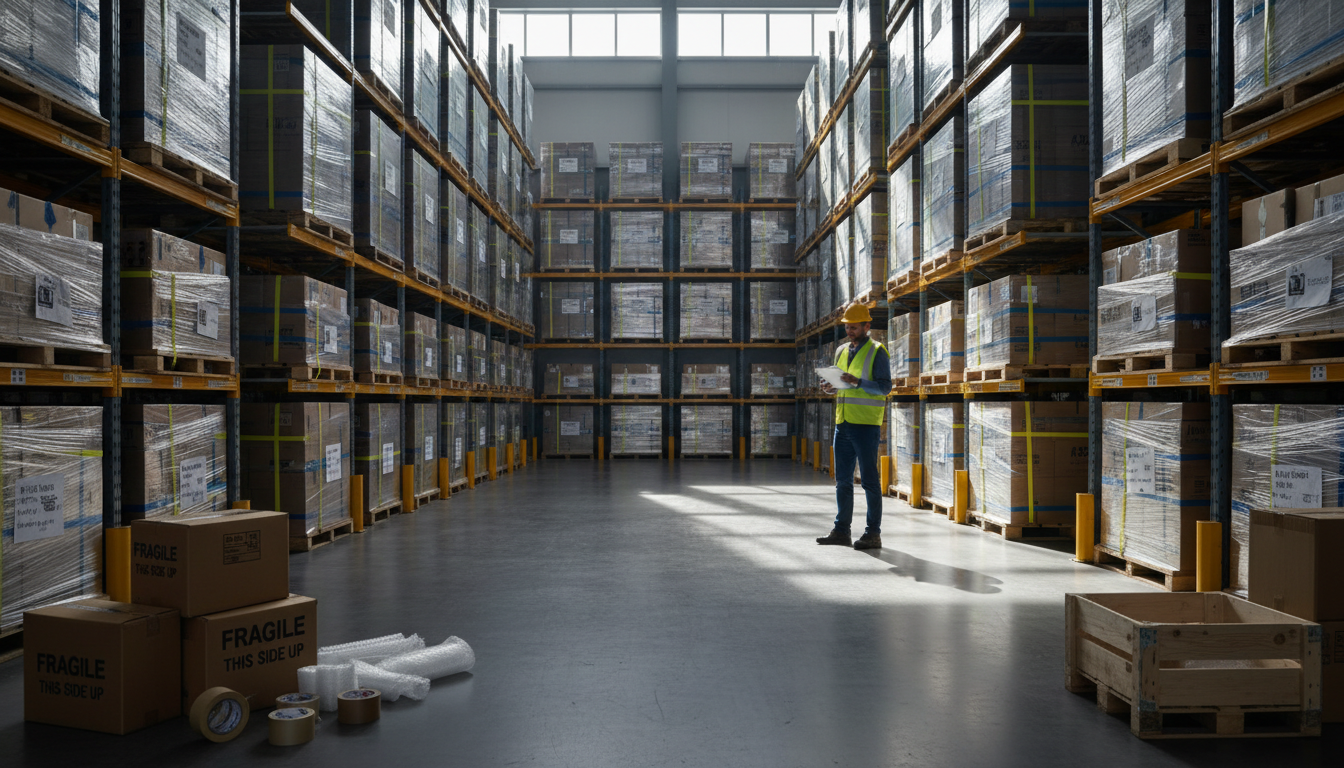
The structural integrity of a shipment begins with the pallet selection. A pallet is not merely a platform; it is the load-bearing base that dictates how a shipment interacts with forklifts and racking systems. For most LTL shipments in the Intermountain region, the standard 48 x 40 inch GMA pallet is the industry benchmark. Using this specific size ensures your freight fits standard trailer widths and avoids space utilization issues that arise with custom dimensions.
Material choice often depends on the budget and the nature of the cargo. While wooden pallets are the most common, plastic alternatives offer specific advantages for certain supply chains.
Pallet Type | Pros | Cons |
|---|---|---|
Wooden | Cost-effective, high availability, easily repaired | Prone to splinters, nails, and moisture absorption |
Plastic | Exceptionally durable, uniform weight, easy to sanitize | Higher initial cost, slippery surface for some loads |
Regardless of the material, never reuse a pallet that shows signs of structural failure. Inspect every pallet for broken stringers, cracked deck boards, or protruding nails. A single loose nail can puncture a container, leading to product loss and environmental hazards. A compromised foundation causes the entire stack to lean during transit, which increases the likelihood of a tip over. Selecting a high quality foundation is the first step in providing reliable logistics solutions for your customers. If you are unsure which pallet type fits your specific lane, you can contact our logistics experts for guidance.
Mastering the Stack: Column vs Interlocking Methods
Once you have selected a high quality pallet, the arrangement of your cargo determines how well the load handles vertical pressure and lateral movement. There are two standard approaches to freight packaging and palletizing: column stacking and interlocking stacking. Each serves a specific purpose depending on the weight and density of your goods.
Stacking Method | Primary Benefit | Best Used For |
|---|---|---|
Column Stacking | Maximum compression strength | Heavy freight and dense materials |
Interlocking | Lateral stability and load cohesion | Lighter items or uniform box sizes |
In column stacking, boxes are placed directly on top of one another, ensuring that the four corners of every carton align perfectly. Because the corners are the strongest part of a corrugated box, this method provides the highest level of vertical strength and prevents the bottom layers from crushing. Conversely, interlocking stacking involves alternating the direction of boxes in a brick-layer pattern. While this method creates a more cohesive unit that is less likely to shift side to side, it significantly reduces the overall weight-bearing capacity because the corners do not align.
Regardless of the stacking pattern, the most critical requirement is the No Overhang rule. Boxes must remain flush with or slightly inside the pallet edges. Allowing cargo to hang over the side reduces the stack's compression strength by up to 30 percent. Overhanging boxes are also highly susceptible to impact damage from other pallets or forklift maneuvers within a distribution hub. A box that is not supported by the pallet deck boards lacks the structural foundation necessary to survive the vibrations of a long haul.
Finally, keep the total height of the pallet to 72 inches or less. Exceeding this limit creates a high center of gravity, increasing the risk of the load tipping during transit. Most LTL trailers have standard clearance heights; staying under 72 inches ensures your shipment fits easily and stays stable. Maintaining these standards is a key part of providing reliable logistics solutions that arrive intact. If you have questions about specific load configurations, contact our logistics experts for personalized guidance.
How to Secure Your Shipment Using Wrap and Banding

A perfectly stacked pallet is only half the battle. To ensure the load does not shift off the base during transit through regional distribution centers, you must properly anchor your stretch wrap. Start by twisting about a foot of the film into a rope-like shape and threading it through the corner of the pallet or around a stringer. Secure this tail with a knot or by overlapping the first layer. Once anchored, begin wrapping from the bottom up, ensuring the wrap covers both the pallet base and the bottom layer of boxes. Apply at least three to five layers of high-quality 80-gauge stretch wrap, maintaining consistent tension to pull the load into a single, cohesive unit.
For heavy loads or fragile corrugated boxes, edge protectors, also known as corner boards, are essential. These rigid cardboard or plastic angles are placed on the four vertical corners of the stack before wrapping. They serve two critical functions: they distribute the tension of the wrap across the entire height of the stack and prevent banding from cutting into and crushing your boxes. Without corner boards, the pressure required to secure a heavy load often results in structural damage to the outer packaging, which can lead to product loss. Integrating these tools is a hallmark of providing reliable logistics solutions for demanding supply chains.
While stretch wrap handles lateral movement, specialized or extra-heavy loads often require banding. If you are shipping machinery or high-density industrial materials, banding provides the vertical security wrap alone cannot offer.
Securing Method | Application | Key Advantage |
|---|---|---|
Stretch Wrap | General LTL freight and uniform cartons | Provides dust protection and lateral stability |
Polyester Banding | Heavy loads that may settle or shrink | High tension recovery and safer handling than steel |
Steel Banding | Sharp-edged crates or non-compressible loads | Maximum break strength with zero stretch |
If you have questions about which securing method is right for your specific freight, you can contact our logistics experts for a detailed assessment.
Labeling Best Practices to Prevent Regional Logistics Delays

Proper freight packaging and palletizing concludes with clear, redundant labeling. In busy regional hubs like Fillmore, forklift operators move quickly and often manage hundreds of pallets per shift. If a shipping label is only on one side, the operator may have to rotate the entire load just to scan it, which adds unnecessary handling and increases the risk of impact. Place shipping labels on all four vertical sides and the top surface. This redundancy ensures visibility regardless of how the pallet is oriented in a trailer or storage rack. If you are reusing pallets, you must remove all old labels, barcodes, and markings. Residual stickers lead to routing errors and scanning failures at automated sorting centers, causing delays that ripple through your supply chain.
Special handling instructions require strategic placement to be effective. For markings like "Do Not Stack" or "Fragile," place these indicators on the upper half of at least two opposite sides where they are most visible to operators.
Label Type | Recommended Placement | Purpose |
|---|---|---|
Shipping Label | All 4 sides and the top | Ensures scanning visibility from any forklift angle |
Do Not Stack | Upper half of 2 sides | Prevents crushing from vertical loading in trailers |
Fragile | All vertical sides | Alerts handlers to use extra caution during transit |
Standardizing this placement helps operators in Intermountain distribution centers identify constraints before they attempt to double stack a trailer. Implementing these protocols is vital for providing reliable logistics solutions that maintain product integrity. If your team needs a specific checklist for regional labeling requirements, you can contact our logistics experts to streamline your outbound process.
Avoiding Common Accessorial Fees and Surcharges
Accuracy in freight packaging and palletizing serves a dual purpose. While it protects the physical cargo, it also serves as your primary defense against unexpected carrier invoices. When a pallet arrives at a regional terminal in the Intermountain area, carriers often use dimensioning systems to verify the data listed on the Bill of Lading. If your recorded weight or measurements differ from the carrier's scan, you will likely incur a re-weigh or re-class fee.
A common pitfall for small businesses is failing to account for the weight of the packaging materials themselves. A standard wooden pallet weighs between 30 and 50 pounds. When combined with heavy-duty stretch wrap and corner boards, the total weight increases significantly beyond the product weight. Reporting only the net weight leads to a re-weigh adjustment. Similarly, a re-class occurs when the density of the shipment changes due to inaccurate dimensions. If boxes overhang the pallet edge, the carrier calculates the density based on the widest point, which may push the freight into a more expensive classification.
Fee Type | Trigger | Impact |
|---|---|---|
Re-weigh | BOL weight differs from carrier scale | Correction fee plus adjusted freight rate |
Re-class | Inaccurate dimensions or density | Significant base rate increase |
Oversized | Pallet footprint exceeds 48 x 40 inches | Flat surcharge for space utilization |
Adhering to the standard footprint and weighing the completed shipment ensures you maintain predictable margins. If you are struggling with fluctuating shipping costs, understanding freight accessorial charges can help you identify where your process needs adjustment. By providing reliable logistics solutions through precise preparation, you eliminate the friction that causes delays. For help auditing your current shipping standards and controlling costs, you can contact our logistics experts today.
Properly preparing your freight is the best way to prevent transit damage and avoid unexpected carrier fees. By using sturdy pallets and securing your items with the right materials, you protect your bottom line and your reputation. While these steps are manageable on your own, freight logistics can become complex quickly. If you want expert help managing these details, you can learn more About our team and our commitment to providing seamless shipping solutions. We are here to ensure your cargo arrives safely and on time.