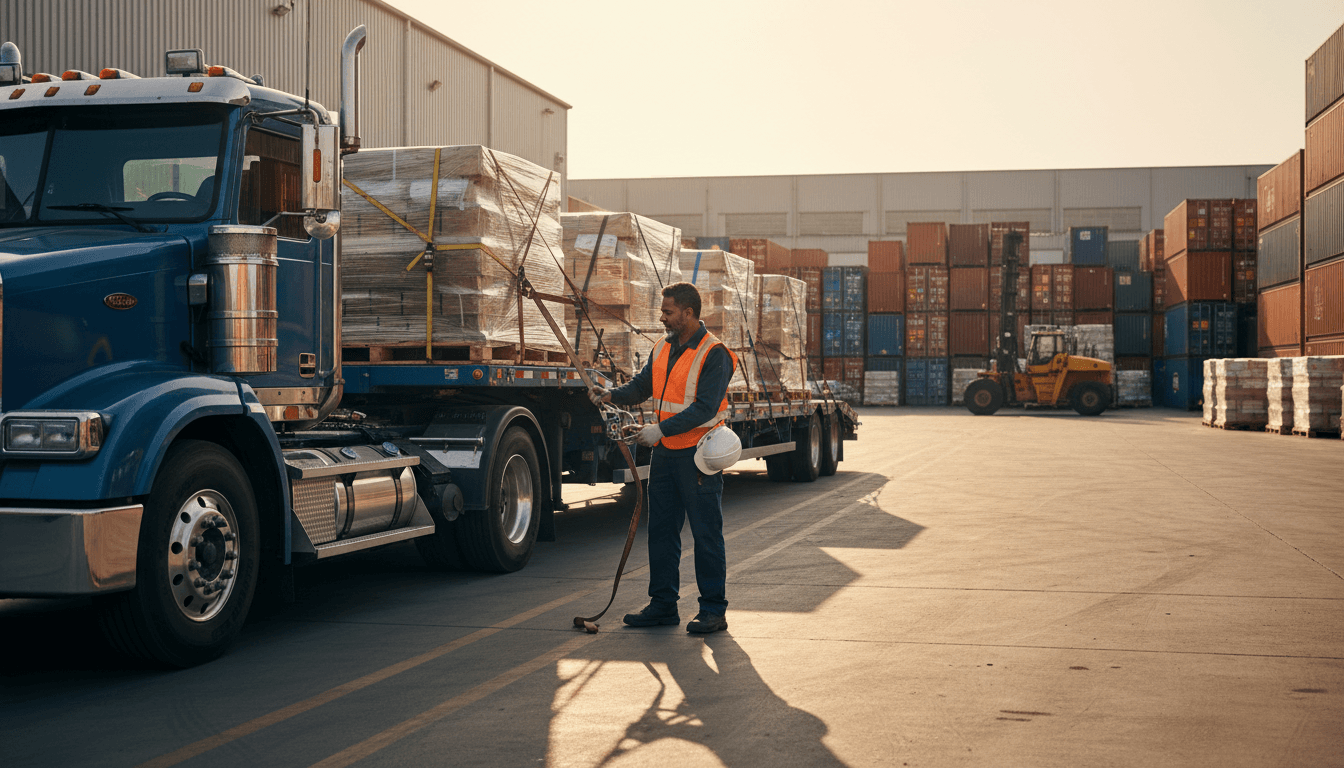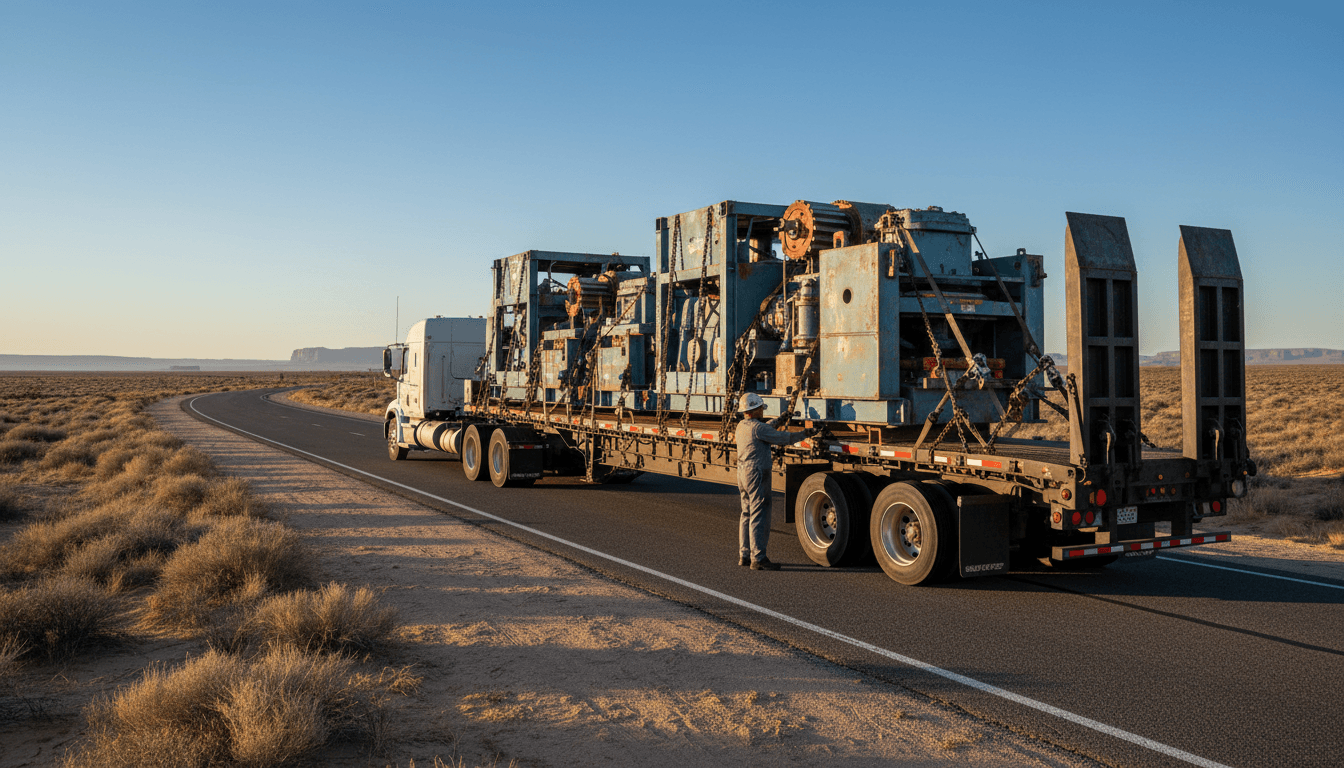
Freight insurance covers the full value of goods during transit to protect shippers against financial loss from damage, theft, or transit delays. Successfully navigating freight insurance claims requires proper documentation and timely filing; this ensures small businesses receive total reimbursement instead of the limited payouts provided by standard carrier liability. This additional layer of protection safeguards a company's bottom line against the inherent risks of logistics and freight transportation.
Few events disrupt a small business supply chain more than discovering a critical shipment arrived damaged or, worse, did not arrive at all. The initial frustration often turns into a financial headache when you realize that carrier liability is not a guarantee of full reimbursement. Most shippers fall into the trap of assuming they are fully protected, only to find that cents per pound payouts do not cover their actual replacement costs. Navigating the complexities of the Carmack Amendment and strict filing timelines requires a strategic approach to risk management. In this guide, we will break down the fundamental differences between carrier liability and cargo insurance; we will also outline the specific steps necessary to file a successful claim. You will learn how to identify concealed damage, meet federal deadlines, and leverage a logistics partnership to safeguard your bottom line against unavoidable transit risks.
The Real Difference Between Carrier Liability and Cargo Insurance

Understanding the distinction between carrier liability and cargo insurance is the first step toward protecting your bottom line. Many shippers mistakenly assume that because a carrier is moving their goods, those goods are fully insured against any loss. In reality, carrier liability is a minimum legal responsibility, not a guarantee of reimbursement for the full commercial value of your freight. While liability is automatically included in your shipping rate, it is strictly limited by federal law and the carrier’s specific tariffs.
Think of the difference like owning a vehicle. Carrier liability is similar to a basic manufacturer's warranty; it covers specific failures under very narrow conditions. In contrast, 'All-Risk' cargo insurance is like a comprehensive auto policy that protects the actual value of the vehicle against a wide range of external threats. While the warranty is built into the purchase price, the comprehensive policy is a separate, intentional purchase designed to mitigate financial risk.
Carrier liability often pays out only a few cents per pound, which rarely covers the cost of modern inventory. If a shipment is lost or damaged, navigating [freight insurance claims] under standard liability requires the shipper to prove the carrier was directly at fault, a process that can be lengthy and difficult. All-Risk insurance bypasses many of these hurdles by covering the full invoice value of the goods, regardless of whether the carrier is legally liable for the specific incident. For businesses relying on reliable logistics solutions, choosing the right level of protection is a critical part of the planning process.
The Cents per Pound Trap: How Liability Limits Impact Your Bottom Line
The primary danger of relying solely on carrier liability lies in the "cents per pound" calculation used by Less-than-Truckload (LTL) carriers. Instead of looking at the commercial invoice to determine a payout, carriers refer to their specific tariffs and the National Motor Freight Classification (NMFC) class of the goods. For many standard shipments, this payout is capped at as little as $0.50 to $2.00 per pound. If your business is moving lightweight but high-value items, this gap can be financially devastating.
Consider a common scenario for a small business: a 100-pound shipment of specialized electronic controllers or precision components. The market value of these goods might be $5,000. However, if the carrier’s tariff limits liability to $0.50 per pound for that freight class, a total loss would result in a check for only $50. You would be left to absorb $4,950 in lost capital while still being responsible for the original freight charges. This math demonstrates why relying on the carrier's default coverage is often a gamble with your company's cash flow.
To visualize the risk, compare these typical weight-to-value ratios common in regional distribution:
Commodity Type | Estimated Weight | Actual Value | Max Liability ($0.50/lb) | Potential Loss |
|---|---|---|---|---|
Commercial HVAC Part | 80 lbs | $1,200 | $40 | $1,160 |
Industrial Sensors | 25 lbs | $3,500 | $12.50 | $3,487.50 |
Office Server Rack | 200 lbs | $8,000 | $100 | $7,900 |
Precision Tooling | 50 lbs | $2,500 | $25 | $2,475 |
Internalizing these figures is essential when preparing [freight insurance claims] because the carrier will not deviate from their tariff limits regardless of the circumstances of the loss. Businesses requiring consistent logistics support must evaluate their specific freight classes and values during the planning stage. If the weight-based math does not align with your replacement costs, securing third-party coverage is the only way to ensure full financial recovery.
The Carmack Amendment: Federal Law and Freight Claims Explained

Understanding these weight-based limits requires looking at the legal foundation of interstate shipping: the Carmack Amendment. This federal law dictates how carriers are held responsible for loss or damage. While it generally holds carriers liable for the goods they transport, it also provides specific legal defenses that can make [freight insurance claims] difficult to win even when damage is obvious.
Under Carmack, carriers are not liable if the damage resulted from one of five specific exclusions:
Acts of God: Unforeseeable natural disasters like floods or tornadoes.
Acts of a Public Enemy: Military actions or hostile acts by foreign powers.
Acts of a Public Authority: Cargo seized or delayed by government intervention, law enforcement, or health inspections.
Acts of the Shipper: Damages caused by improper loading, mislabeling, or inadequate packaging by the sender.
Inherent Vice: The natural tendency of goods to spoil, evaporate, or break due to their own internal properties.
Crucially, the burden of proof rests on the shipper. To successfully recover losses, you must demonstrate that the goods were in good condition at the time of pickup, they arrived in damaged condition, and the damage resulted in a quantifiable financial loss. Because carriers often leverage these exclusions to deny liability, having professional logistics support is vital for documenting every stage of the transit process accurately from the moment the truck arrives at your dock.
Critical Timelines: The 9 Month Rule and the 5 Day Warning
Proving carrier fault is difficult enough without missing the strict procedural deadlines that govern the industry. Under federal regulations, shippers generally have up to nine months from the date of delivery to file formal freight insurance claims. While this window seems generous, it only applies to the submission of the final paperwork; it does not provide a buffer for discovering damage that was not documented at the point of exchange.
The most dangerous timeline is the five day window for concealed damage. If you open a crate weeks after delivery and find broken internal components, the carrier will likely deny the claim immediately. Most carrier tariffs require notification of concealed damage within five business days. Waiting even one day too long often results in an automatic denial, as the carrier will argue the damage occurred while the goods were sitting in your warehouse.
Everything hinges on the Delivery Receipt (DR). When a receiver signs the DR without noting exceptions, they are providing a clean signature. Legally, this acts as an admission that the freight was received in good order. Overcoming a clean signature during a claim is an uphill battle. Providing consistent logistics support to your receiving team involves training them to inspect every pallet before the driver leaves, ensuring that any suspicion of damage is noted in writing immediately.
Step by Step Checklist: How to File a Freight Claim Properly

Meeting the strict deadlines mentioned previously is only half the battle; submitting incomplete or poorly documented freight insurance claims is the most common reason for a denial. To protect your capital, your receiving team must follow a rigorous, standardized workflow every time a truck arrives at your dock in Fillmore or across the region.
Inspect immediately upon arrival: The inspection process starts the moment the driver opens the trailer door. Do not allow the driver to rush the process. Look for crushed corners, punctured shrink wrap, or signs that a pallet has been restacked. If the outer packaging is compromised, there is a high probability the contents are as well.
Note specific damage on the Delivery Receipt (DR): Legally, a signature on a DR without notations is an admission that the cargo arrived in perfect condition. Avoid vague terms like "damaged." Instead, be precise: write "two cartons crushed on bottom tier" or "pallet wrap torn, one unit missing." This specific language is critical for successful logistics support during the recovery process.
Capture high-quality visual evidence: Take photos of the shipment from all four sides before it is unloaded, if possible. Document the damaged area, the way the freight was braced, and any debris inside the trailer. These photos provide the necessary context to prove the damage occurred during transit.
Retain all salvage and packaging: Never discard the damaged goods or the shipping materials until the claim is fully resolved. Carriers have a legal right to inspect the salvage to verify the extent of the loss. Disposing of the packaging too early is a top reason for claim rejection, as it prevents the carrier from performing their due diligence.
Compile the formal documentation: Gather the original commercial invoice, the signed BOL, the inspection photos, and a formal repair estimate. By preparing a complete package, you enable reliable logistics solutions to move forward without the delays caused by back and forth information requests.
Concealed Damage vs Visible Damage: Navigating the Toughest Claims
Differentiating between visible and concealed damage is often the difference between a straightforward reimbursement and a protracted dispute. Visible damage is recorded on the spot, providing immediate evidence for [freight insurance claims]. Concealed damage, however, refers to breakage discovered only after the driver has departed and the packaging is opened.
Winning a concealed damage claim is notoriously difficult because the carrier holds a signed Delivery Receipt (DR) stating the goods arrived in good order. They will frequently argue that the damage occurred during your internal unloading process or while the items sat in your warehouse. To mitigate this risk, you must adopt a proactive inspection strategy.
One practical tip is to perform a shake test on every carton. If you hear rattling or suspect internal movement, note it on the DR immediately. Look for minor cues like crushed corners, scuff marks, or flattened fluting on the cardboard. Even if the driver is in a hurry, do not sign a clean receipt until you have performed a thorough visual audit. Implementing these steps as part of your regular logistics support protects your right to a full recovery.
Why Small Businesses Need a Logistics Partner for Claims Support
Navigating the recovery process alone often leaves small business owners overwhelmed by technical jargon and carrier pushback. Working with a regional partner like Intermountain Logistics in Fillmore, UT, provides a level of advocacy that large, national freight farms cannot match. We maintain direct relationships with local terminal managers and understand the specific nuances of routes throughout the Intermountain region. This proximity allows for faster communication when freight insurance claims arise; we can often resolve disputes through established professional networks rather than waiting in a generic customer service queue.
Our approach to logistics support focuses on prevention as much as recovery. We vet carriers based on their historical reliability and claim handling performance, ensuring your cargo is in professional hands from the start. By assisting with precise documentation from the very first Bill of Lading, we make sure your paperwork is air-tight before a driver even arrives at your dock. If an issue occurs, having an expert team to review your evidence and interface with carrier adjusters protects your time and capital. To strengthen your supply chain, contact our team to discuss customized shipping protections.
Protecting your small business through proper freight insurance is essential for long term stability. While understanding the claims process helps you manage unexpected losses, the logistics landscape remains complex and time consuming. If you want expert help navigating these shipping challenges, we are here to support your growth. You can learn more about Intermountain Logistics and how our team simplifies the transportation process for our partners. We focus on providing reliable solutions so you can stay focused on your core business goals.